Before the Towers Go Up: Bill Would Require a Study of 765-kV Lines First
Rep. Shelby Slawson represents House District 59. Coryell, Erath, Hamilton and Hood counties.

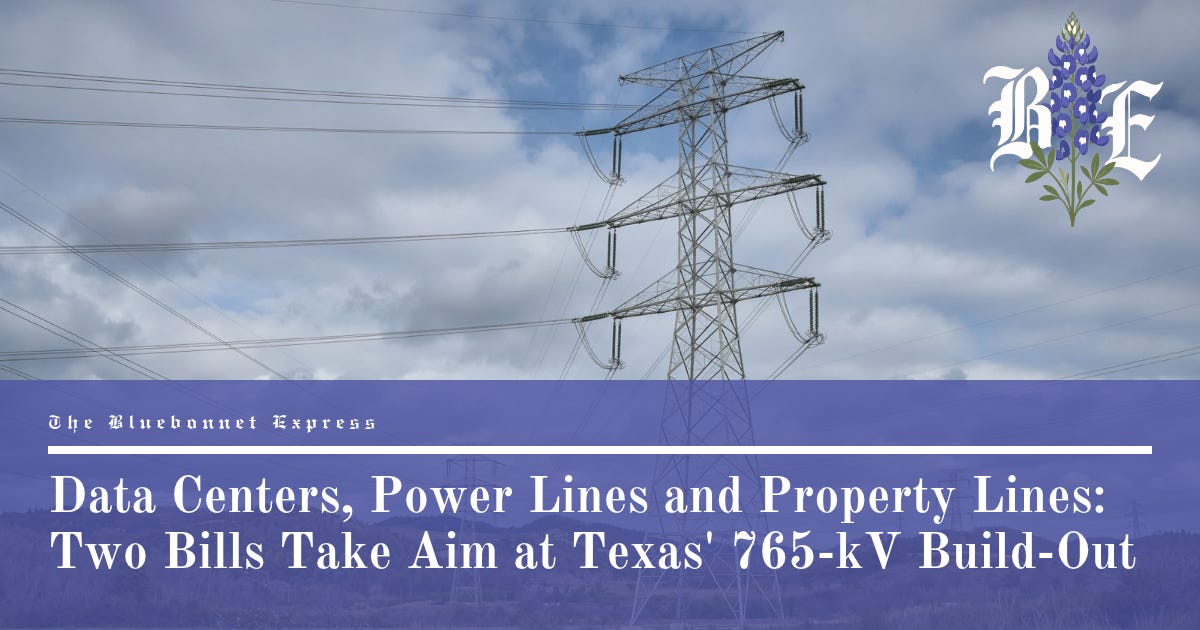
Filed on Monday, HB 184 would bar the Public Utility Commission from approving any 765-kV line until the commission first completes a study. The text names the Permian Basin Reliability Plan, PUC Project 55718, as one of the approvals covered.
The study would have to look at how extra-high-voltage lines perform under different dispatch scenarios, including different times of day, times of year and weather conditions. It would estimate what the lines would cost ratepayers, with particular emphasis on residential customers. It would also examine what could cause cost overruns and how to reduce them, along with supply chain and workforce limits that could delay construction.
The PUC would then have to send its results to an independent third party for review. The bill rules out any reviewer that conducted a similar study of extra-high-voltage lines for ERCOT or another market participant after Jan. 1, 2020. The study requirement would expire Sept. 1, 2029.
HB 1005 deals with people who live next to the lines. Under the text, the PUC would require a utility that builds, leases, owns or operates extra-high-voltage lines to exempt or reimburse, twice a year, all of the transmission and distribution charges on the electric bill of a residential customer whose property is next to a line and from whom land was acquired for that line, “via eminent domain or otherwise.” That would apply even when a different utility provides electric service to the home.
The benefit would last until the property changes from the residential or agricultural use it had before the line was built to a commercial or industrial use, or until Sept. 1, 2076, whichever comes first. The text says the landowner can assign or transfer the benefit to a buyer in a contract for the sale of the property.
Both bills would take effect immediately if two-thirds of the members of each chamber vote for them. Otherwise they would take effect Sept. 1, 2027.
The bills come as the PUC works through applications for the lines. The Texas Tribune reported in September that the commission approved the Howard-Solstice line, which runs about 370 miles across 14 counties, including Uvalde, Kerr, Bexar and Medina. The Tribune reported that the commission directed the companies to work with landowners on route changes.
Landowner groups including the Hill Country Preservation Coalition and American Stewards of Liberty oppose the lines, the Tribune reported, citing damage to property and concerns about the approval process. Industry and oil and gas groups say the lines are needed for growth and for the reliability of the grid, according to the Tribune.
Texas Scorecard reported Nov. 5 that the PUC extended the time it has to consider motions for rehearing on Howard-Solstice to the maximum allowed by law.
In August, the San Saba News & Star reported that Slawson, Sen. Kevin Sparks (R) SD-31 and Rep. Brad Buckley (R) HD-54 urged the PUC to deny all five 765-kV applications. In an Aug. 11 letter filed with the commission, Slawson asked it to deny the Dinosaur-Longshore segment and the four related segments. She wrote that lawmakers had not held hearings, debate or votes “on any proposal of the scope and magnitude of the 765kV lines now before you.”
Neither bill has become law. Both were filed Nov. 9, 2026. The Legislature convenes Jan. 12, 2027, and bill filing runs through March 12, 2027. Filing a bill does not guarantee a hearing or a vote.
Discussion about this post